How to Extend Engineering Team Capacity in Manufacturing and MEP
Engineering leadership’s constant challenge is managing how work is delivered when multiple projects overlap and timelines tighten.
At some point, every team reaches a limit. Deadlines start competing, internal resources get stretched, and output quality becomes harder to maintain. Hiring may seem like the logical solution, but it often arrives too late and stays too long after demand drops.
Rethinking how to extend engineering team capacity, instead of increasing headcount, is a growing concern to seek a robust solution to respond to workload changes without disrupting delivery. Commercial/industrial product manufacturers, and MEP engineering firms are searching for reliable and secure extensions to the technical teams. This is where Giga Techspace CAD outsourcing services and BIM outsourcing services become a valued partner.

Why Hiring Alone Cannot Solve Capacity Challenges
Hiring works when demand is stable. Engineering projects are rarely predictable.
A typical project does not require the same level of effort from start to finish. In MEP coordination, production demand spikes sharply during design development and coordination phases - clash detection, equipment scheduling, and construction document preparation - then drops significantly once construction is underway. In manufacturing environments, demand surges during product development cycles, R&D phases, and pre-production engineering, then levels out once the design is released.
If firms hire to meet peak demand, they often face underutilized teams later. If they delay hiring, projects fall behind. This mismatch creates a cycle where teams are either overloaded or underutilized, neither of which supports efficient delivery.
Extending Engineering Team Capacity Without Increasing Headcount
Extending engineering team capacity is not about adding more people permanently. It is about aligning production capability with actual project demand.
Firms that manage this well do not treat capacity as fixed. They treat it as something that can expand or contract depending on the workload.
Instead of relying only on internal teams, they use structured approaches to bring in additional support when needed. This allows them to maintain delivery timelines without committing to long-term hiring decisions.
How Modern Firms Handle Overflow Production Capacity
When additional work appears suddenly, firms typically respond in one of three ways. Each approach has limitations.
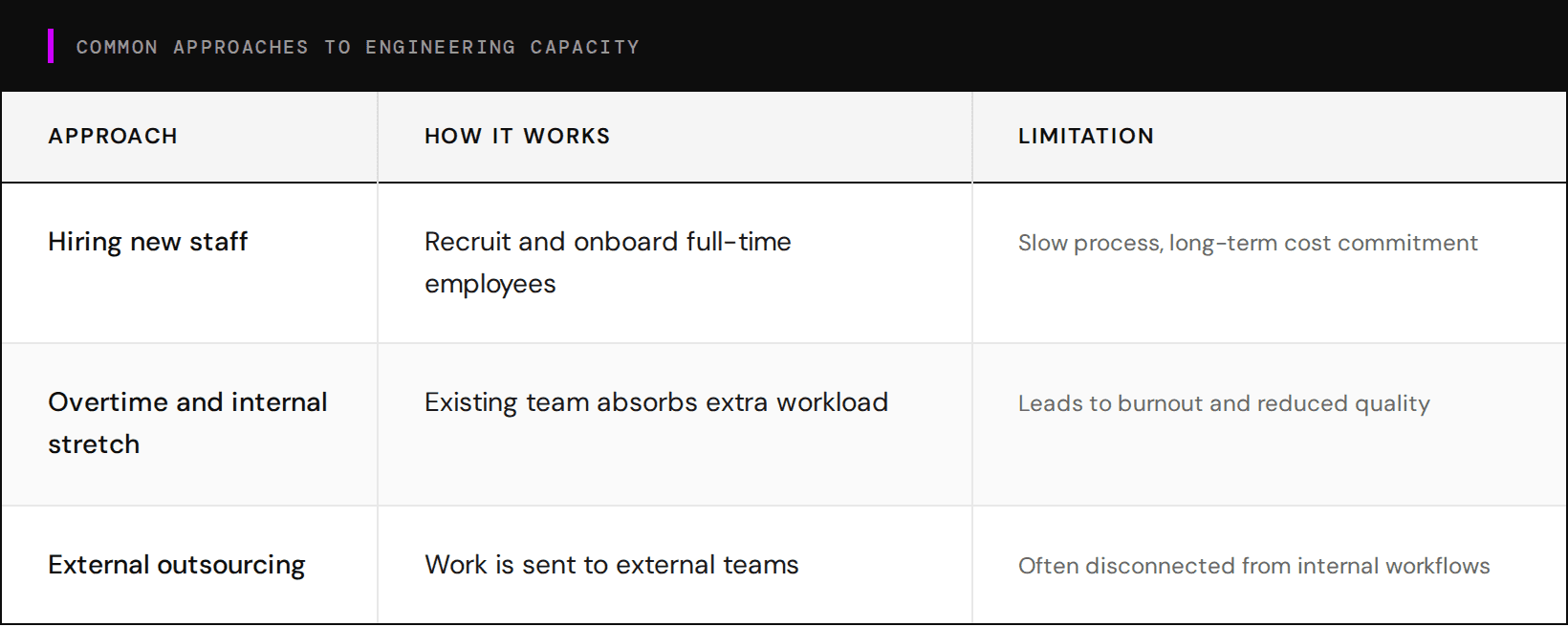
Firms that manage overflow production capacity well develop additional production support by using structured solutions such as Giga Techspace CAD outsourcing services and BIM outsourcing services, where additional capacity operates within controlled environments aligned with internal documentation standards and project workflows.
How to Scale Engineering Workforce Without Disrupting Workflows
Scaling engineering workforce is not only addressing capacity but ensuring that any additional capacity fits seamlessly into existing workflows.
When design files do not conform to internal standards, component specifications, or use incompatible software, rework is required before they move into production or construction. Same for documentation, as coordination efforts increase correcting inconsistencies rather than progressing work.
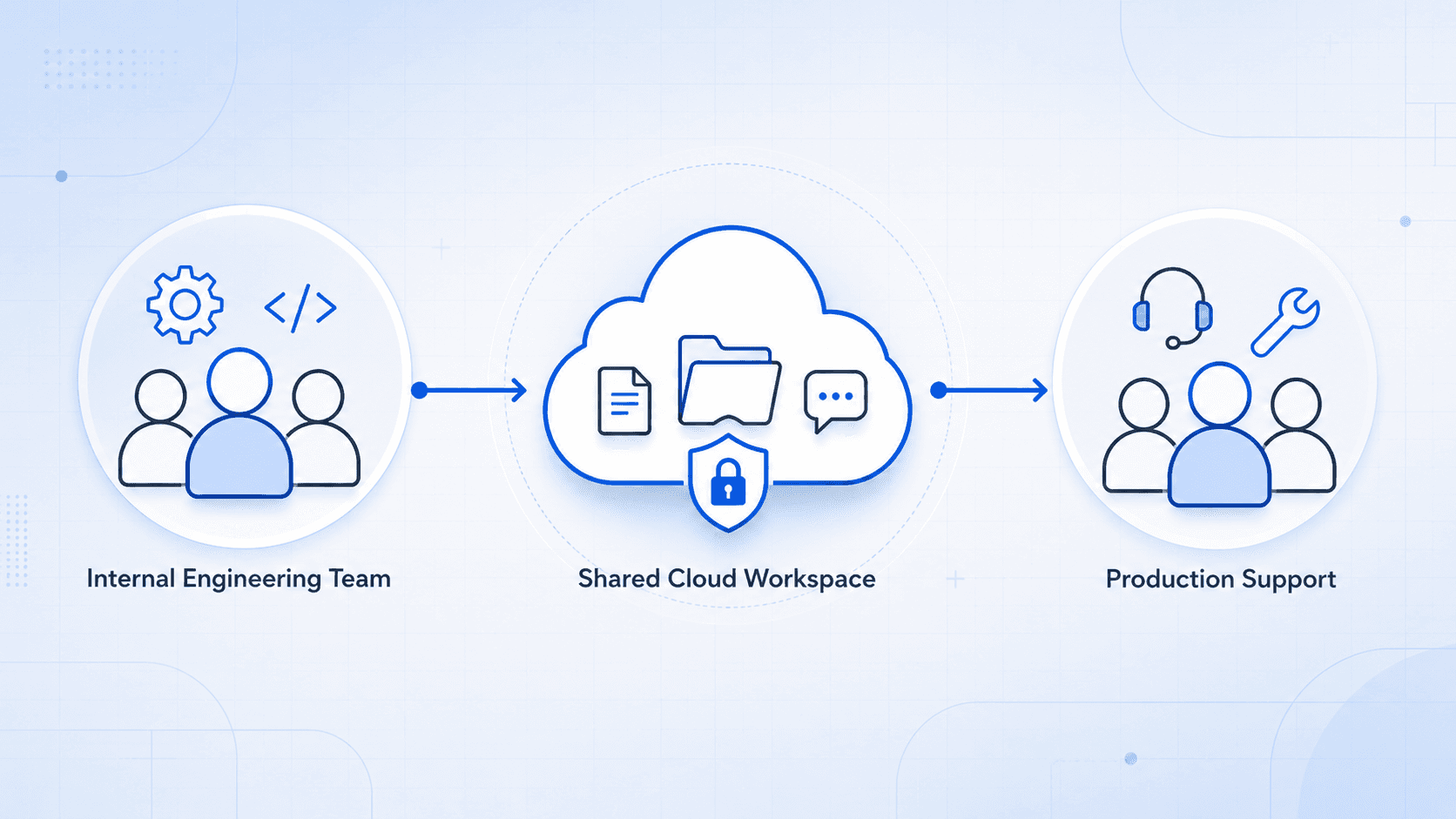
Teams that successfully scale engineering output focus on integration as well as expansion. Confirming that standards are met, specifications followed, ensured software compatibility and secure file storage and transfer exists supports existing processes instead of disrupting them. Giga Techspace understands this and has this full-service solution as standard.
Aligning Capacity with Project Demand
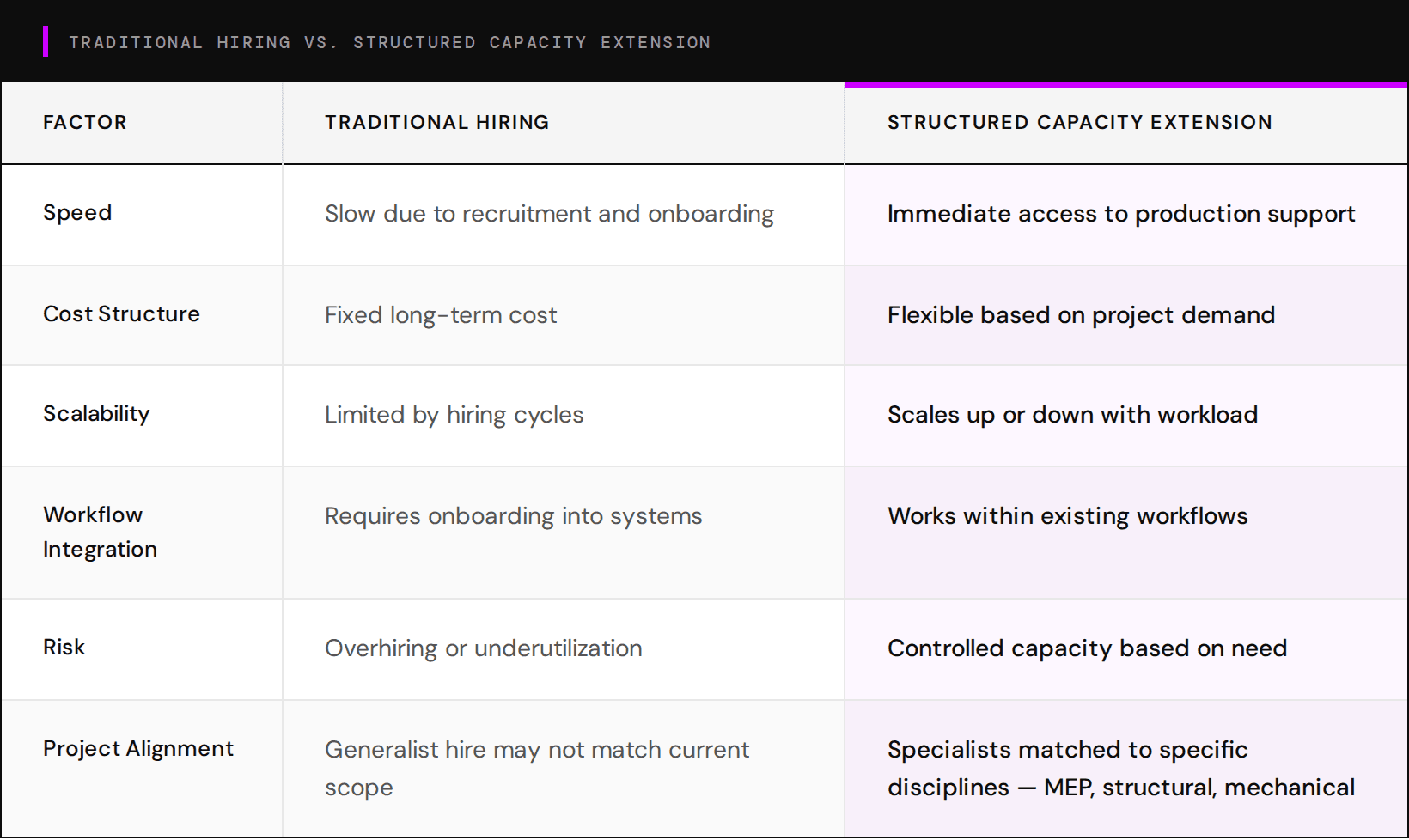
Responding to current and upcoming resource demand requires flexibility without delay. Successful Companies are moving away from fixed capacity models and aligning resources based on actual workload. A solid business partner, like Giga Techspace, reduces risk and makes this activity more of a business tool to help companies grow.
Supporting Internal Teams Without Overload
Instead of stretching internal teams during peak phases, extended capacity provides additional support. This helps maintain consistent output without impacting on team performance or quality.
Reducing Dependence on Reactive Hiring
By building variable-capacity systems, firms avoid last-minute hiring decisions. This reduces onboarding delays and allows teams to focus on delivery instead of recruitment.
Explore Structured Engineering Support
Extend your engineering team capacity with structured support designed to manage overflow production capacity and maintain consistent delivery across projects.
FAQs About Extending Engineering Team Capacity
How can engineering managers extend engineering capacity without increasing headcount?
Engineering managers can extend engineering capacity by integrating external structured support into their workflows. This allows core teams to manage core engineering and technical production workload efficiently while maintaining alignment with business objectives and timelines.
What is the role of engineering talent in scaling workforce output?
Engineering talent plays a critical role in how effectively firms scale engineering workforce output. Access to the right skills at the right time helps maintain consistency, reduce delays, and support complex project requirements without overloading internal teams.
How does poor capacity planning lead to "technical debt"?
When engineering capacity is not managed properly, teams often rush deliverables or skip standard processes to meet deadlines. Over time, this leads to “technical debt,” where systems and documentation are disorganized and require additional effort to correct or maintain, if at all.
How can firms manage overflow production capacity across multiple teams?
Managing overflow production capacity requires coordination across teams and clear visibility into project progress. Structured collaboration ensures that additional support aligns with existing systems and does not create conflicts with other teams or departments.
What are common mistakes firms make when trying to scale engineering workforce?
Assuming internal teams can meet the increased workload as the only immediate option. This approach often leads to inefficiencies, delays, and misalignment of engineering resources and business objectives. Recognize the pattern when “senior or experienced” personnel are valued as “jack-of-all trades,” as it may not serve the company or the employee relationship well.